
我的网站

Good Luck To You!

R1-1 Wrong Problem lesson Record
Federal taxation of Individuals  R1 

Note :

*) Interest income from U.S. obligations is generally taxable. Interest income on a federal tax refund is taxable, even though the federal refund itself is not taxed.

*) Self-Employment Tax calculation : not include Interest,dividen,rental,captial and other income, only include general(ordinary)income

*) Form 1040, Schedule 1, Part I, Additional Income:Gambling winning are included in taxable gross income and should be shown on line 8b of Schedule 1, Part I .

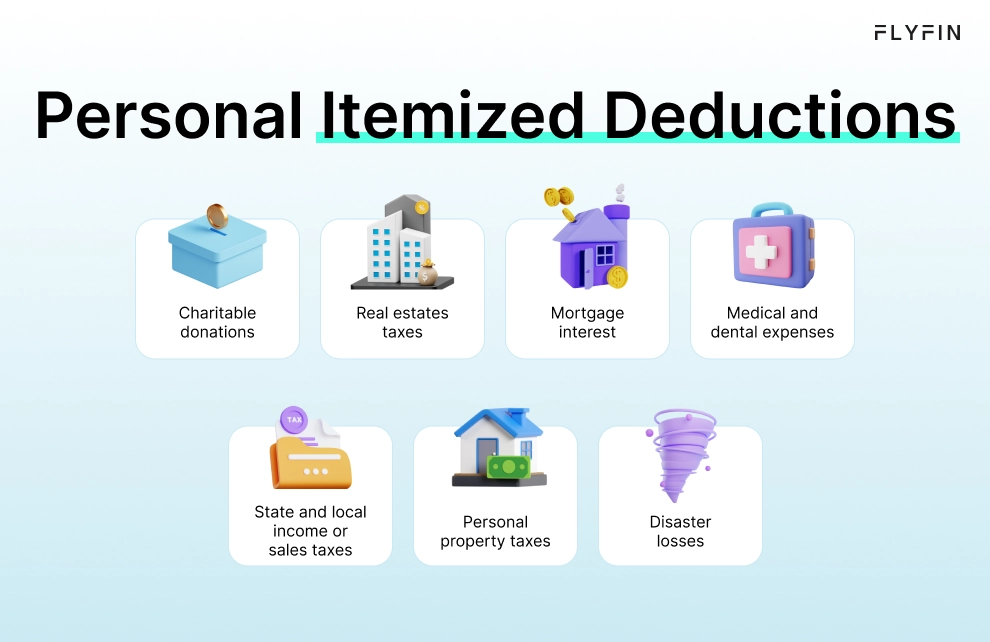
*) Itemized Dudctions

- Medical Expenses :  over <7.5%AGI>  Qualified medical expenses, minus insurance reimbursement = Qulified medical expenses "Paid" minus 7.5% of AGI = Deductible medical expenses.

- Taxes: [Limited $10,000] Real Estate and Personal property state and local Taxes ; Income Taxes(state,local and foreign Taxes),Sales Tax.

Nondeductible Taxes : Federal taxes including Social Security,Inheritance taxes for states, Business (on Schedule.C) and Rental property taxes (on Schedule E). 

- Casulalty Losses (10% AGI floor and $100 floor to each and each disaster)

- Gambling Losses : Limited gambling winnings.

- Interest Expense : (Home mortgage:limited $750,000 principal and Investment:Limited net taxable investment income) interest expense, not deductible  carryforward indefinitely.

- Charitable Contributions: Limite,  Carryover 5 years.

to Public and private operating foundations : Cash 60% AGI, Ordinary income property 50%, Long-term Capital gain property 30%.

to private nonoperating foundations : Cash 30% AGI, Ordinary income property 30%, Long-term Capital gain property 20%.


1. 

Which of the following taxpayers would not qualify for the filing status of head of household?

A.
B.
C.
D.

2. 

The spouse of a married taxpayer died on January 15, Year 1. The taxpayer's qualifying child moved to live with grandparents in their home on August 30, Year 2. If the taxpayer did not remarry before the end of Year 2, then which filing status should the taxpayer choose for Year 2?   (Note: QW qualifying child must live the whole year. )

A.
B.
C.
D.

3. 

Anderson, a computer engineer, and spouse, who is unemployed, provide more than half of the support for their younger child, age 23, who is a full-time student and who earns $7,000. They also provide more than half of the support for their older child, age 33, who earns $2,000 during the year. Both children are U.S. citizens and live in their parents' home for most of the year. How many dependents meet qualifying relative or qualifying child rules for the Andersons?

A.
B.
C.
D.

Answer : The older child earning only $2,000( QR Income test $5,200 2025) , Anderson suppport more than 0ne-half support. 

4. 

Nicole and Andrew Harris contribute to more than half of the support of their three children, Travis, Luke, and John. Travis, age 20, worked full time at the local deli and earned $20,000. Luke, 18, is a part-time college student who earned $5,000 working as a resident assistant in the student dormitory where he lived half of the year. John, age 25, is an aspiring actor who lives at home with Nicole and Andrew. John earned $2,500 for the three commercials he starred in. Who qualifies as a dependent for Nicole and Andrew under either the rules of qualifying child or qualifying relative?

A.
B.
C.
D.

Answer :  Travis age over 19 not full-time student , and income over $5,200 limited so Not QC or QR ; Luke  less 19 ; John as QR  income test is approvel and any test is approved . So Luke QC and John QR. 

5.  Fill tax return Status : 

Sam and his spouse divorced in December of the current year. Sam's 12-year-old son lived with his mother during the school year and lived with Sam in the summer. Sam provided most of their son's support.  【Single】

Tiana and her spouse divorced in January of the current year. Tiana's 9-year-old daughter lived with her during the school year and lived with her father in the summer. Her father provided most of their daughter's support. 【House of Hold】

Carey and Donald, became engaged in January of the current year. They lived together for the entire year and got married on January 2 of the following year. Carey and Donald each had taxable wages of $50,000 during the current year. Carey and Donald do not have children or other dependents. 【Single】

Edgar is unmarried and provides most of the support for his elderly aunt. Edgar paid more than half of the costs of his aunt's nursing home, where she lived the entire year. Edgar's aunt did not have any taxable income in the current year. 【Single】

Kevin's spouse, Louise, died five years ago. Louise and Kevin do not have children or other dependents. 【Single】

Quinn's spouse, Robert, died five years ago. Quinn paid most of the costs of maintaining a home where her 17-year-old daughter lived until May of the current year, when her daughter went to live with her grandmother.【Single】

Yvonne and her spouse married three years ago. In October of the current year they moved into separate homes. They obtained a legal separation in November of the current year. They do not have children or other dependents. 【Single】

Xavier is unmarried and provided most of the support for his 25-year-old girlfriend, who lived in Xavier's home for the entire year. Xavier's girlfriend did not have any taxable income in the current year. 【Single】

Note: Head of Household "HOH" the taxpayer maintains as his/her a household that ,for more than half the taxpable year,is the principal residence of a quanlifiing person,including a dependent child,parent or relative.  

The individual is unmarried ,legally seperated, or married and has lived apart from his or her spouse for the last six months of the year as of the close of the taxable year.

The individual is not a"qualifiying surving spouse".

The individual is not a nonresident alien.

6. 

John and Mary were divorced in 2017. The divorce decree (executed June 30, 2017) provides that John pay alimony of $10,000 per year, to be reduced by 20 percent on their child's 18th birthday. During the current year, the $10,000 was paid in the following way: John paid $7,000 directly to Mary and $3,000 to Spring College for Mary's tuition. What amount of these payments should be reported as income in Mary's current year income tax return?

A.
B.
C.
D.

7. 

DAC Foundation awarded Kent $75,000 in recognition of lifelong literary achievement. Kent was not required to render future services as a condition to receive the $75,000. What condition(s) must have been met for the award to be excluded from Kent's gross income?

I.

Kent was selected for the award by DAC without any action on Kent's part.

II.

Pursuant to Kent's designation, DAC paid the amount of the award either to a governmental unit or to a charitable organization.

Answer:  Both I and II 

8.  

Klein, a master's degree candidate at Blair University, was awarded a $12,000 scholarship from Blair in Year 8. The scholarship was used to pay Klein's Year 8 university tuition and fees. Also in Year 8, Klein received $5,000 for teaching two courses at a nearby college. What amount is includable in Klein's Year 8 gross income? 

Answer : $5,000 , Scholarships are nontaxable for degree-seeking students to the extent that the proceeds are spent on tuition, fees, books, and supplies. The $5,000 for teaching courses is taxable compensation for services delivered.

9.

Which one of the following will result in an accruable expense for an accrual-basis taxpayer?

A.
B.
C.
D.

10. 

A cash basis taxpayer should report gross income:  For the year in which income is either actually or constructively received, whether in cash or in property.

11.

Jensen reported the following items during the current year:

Fair rent value of a condominium owned by Jensen's employer

1,400

Cash found in a desk purchased for $30 at a flea market

400

Inheritance

11,000

The employer allowed Jensen to use the condominium for free in recognition of outstanding achievement. Based on this information, what is Jensen's gross income for the year?

Answer : $1,800 Gross income includes employee achievement awards not in the form of tangible personal property. Tangible personal property does not include lodging. Gross income also includes treasure troves to the extent of its value in United States currency.

12. 

In Year 2, Carson was hired as an employee of Barton Co. As part of his employment contract, Barton provided a company car for Carson's spouse, Mary, who is not employed. The value for the use of the automobile in Year 2 was $8,000. Carson does not use the automobile. Carson and Mary file separate individual income tax returns. What amounts, if any, should be reported as a taxable fringe benefit on Carson and Mary's Year 2 income tax returns for the personal use of the automobile?

A.
B.
C.
D.

13.

In a tax year where the taxpayer pays qualified education expenses, interest income on the redemption of qualified U.S. Series EE Bonds may be excluded from gross income. The exclusion is subject to a modified gross income limitation and a limit of aggregate bond proceeds in excess of qualified higher-education expenses. Which of the following is (are) true?   Answer : Both 1and 2

1.

The exclusion applies for education expenses incurred by the taxpayer, the taxpayer's spouse, or any person whom the taxpayer may claim as a dependent for the year.

2.

"Otherwise qualified higher-education expenses" must be reduced by qualified scholarships not includible in gross income.

Explanation : Interest earned on Series EE bonds issued after 1989 may qualify for exclusion. One requirement is that the interest is used to pay tuition and fees for the taxpayer, spouse, or dependent enrolled in higher education. The interest exclusion is reduced by qualified scholarships that are exempt from tax and other nontaxable payments received for educational expenses (other than gifts and inheritances).

14.

Clark bought Series EE U.S. Savings Bonds after 1989. Redemption proceeds will be used for payment of college tuition for Clark's dependent child. One of the conditions that must be met for tax exemption of accumulated interest on these bonds is that the:

A.
B.
C.
D.

15.

Terry received an ordinary dividend of $5,000 and capital gain distributions of $7,000 from a mutual fund company. Terry took no cash out of the account, but reinvested all of the dividends and capital gain distributions. What is Terry's gross income?    Answer :  [$12,000] 

16.

Robbe, a cash-basis single taxpayer, reported $50,000 of adjusted gross income last year and claimed itemized deductions of $13,550, which included $5,500 of state income taxes paid last year. Robbe's itemized deduction amount exceeded the standard deduction available to single taxpayers for last year by $1,150. In the current year, Robbe received a $1,500 state tax refund relating to the prior year. What is the proper treatment of the state tax refund?

A.
B.
C.
D.
Explanation

Choice "B" is correct. Under the tax benefit rule, an itemized deduction recovered in a subsequent year is included in income in the year recovered. In this situation, the taxpayer only received a tax benefit of $1,150, the amount by which total itemized deductions exceeded the standard deduction in the prior year. Therefore only $1,150 of the $1,500 state tax refund is included in taxable income for the current year.

17.

Kurstie received a $800 state income tax refund this year. Kurstie deducted $3,000 of state income taxes paid in the prior year as part of her itemized deductions. Which of the following statements regarding the taxability of Kurstie’s refund is true?

A.
B.
C.
D.

18.

Which of the following should be included when determining adjusted gross income?

A.
B.
C.
D.
Explanation

Rule: Payments for the support of a spouse (alimony) are income to the spouse receiving the payments and are deductible to arrive at adjusted gross income (AGI) by the spouse making the payments on any divorce agreement executed on or before December 31, 2018. Alimony paid according to a divorce agreement executed after December 31, 2018, is neither taxable to the recipient nor deductible by the payor. To be alimony:

  1. Payments must be legally required pursuant to a written divorce or separation agreement,

  2. Payments must be in cash or its equivalent.

  3. Payments cannot extend beyond the death of the payee-spouse,

  4. Payments cannot be made to members of the same household.

  5. Payments must not be designated as anything other than alimony, and

  6. The spouses may not file a joint tax return.

Opition C The rental value of parsonages (furnished by churches or synagogues) is excluded from the gross income of a minister and the minister's adjusted gross income.

19.

An individual received $50,000 during the current year pursuant to a divorce decree executed in 2015. A check for $25,000 was identified as annual alimony, checks totaling $10,000 as annual child support, and a check for $15,000 as a property settlement. What amount should be included in the individual's gross income?

A.
B.
C.
D.

20. 

For a cash basis taxpayer, gain or loss on a year-end sale of listed stock arises on the:

A.
B.
C.
D.

21.

With regard to the inclusion of Social Security benefits in gross income for the tax year, which of the following statements is correct?

A.
B.
C.
D.

The maximum amount of taxable Social Security benefits is 85 percent of Social Security benefits received. The amount of Social Security benefits that is taxed depends on whether modified adjusted gross income (AGI plus tax-exempt interest plus 50 percent of the Social Security benefits) is greater than a threshold amount. For higher income taxpayers with modified AGI of more than $34,000 ($44,000 MFJ), up to 85 percent of Social Security benefits received for the year are taxable.

No Social Security benefits are taxable for lower income taxpayers with modified AGI of $25,000 or less ($32,000 MFJ). However, up to 50 percent of Social Security benefits are taxable for middle-income taxpayers, and up to 85 percent of Social Security benefits are taxable for higher income taxpayers.

22.

Daisy Dunn, a single calendar-year taxpayer with no dependents, died on March 1, Year 1. Daisy earned $20,000 from her job in Year 1 before she died and had interest income from bank accounts of $500. Her estate received another $1,500 of interest from her bank accounts in Year 1 after her death.

What is the due date for Daisy's Year 1 final federal income tax return?

A.
B.
C.
D.
Explanation

Choice "D" is correct. The final income tax return of a decedent for the year of death is due at the same time the decedent's return would have been due if the taxpayer was still alive. For a calendar-year taxpayer, the final return is due on April 15 following the year of death, regardless of when during that year the death occurred. Daisy was a calendar-year taxpayer and died in Year 1, so her final income tax return for Year 1 is due by April 15, Year 2.    

Note: Daisy's taxable gross income $20,500 , The $1,500 of interest income received after Daisy's death by her estate should be included on the estate's Year 1 federal income tax return.

23. 

Which payment(s) is (are) included in a recipient's gross income?   Anser : Both I and II

I.

Payment to a graduate assistant for a part-time teaching assignment at a university. Teaching is not a requirement toward obtaining the degree.

II.

A grant to a Ph.D. candidate for his participation in a university-sponsored research project for the benefit of the university.

24. 

Sandy received $200 for serving as a juror in a state court proceeding.  Include as Ordinary income (Generally, all items of income are included in gross income unless specifically excluded. Jury duty payments are compensation for services provided and therefore are includable in gross income.)

25. 

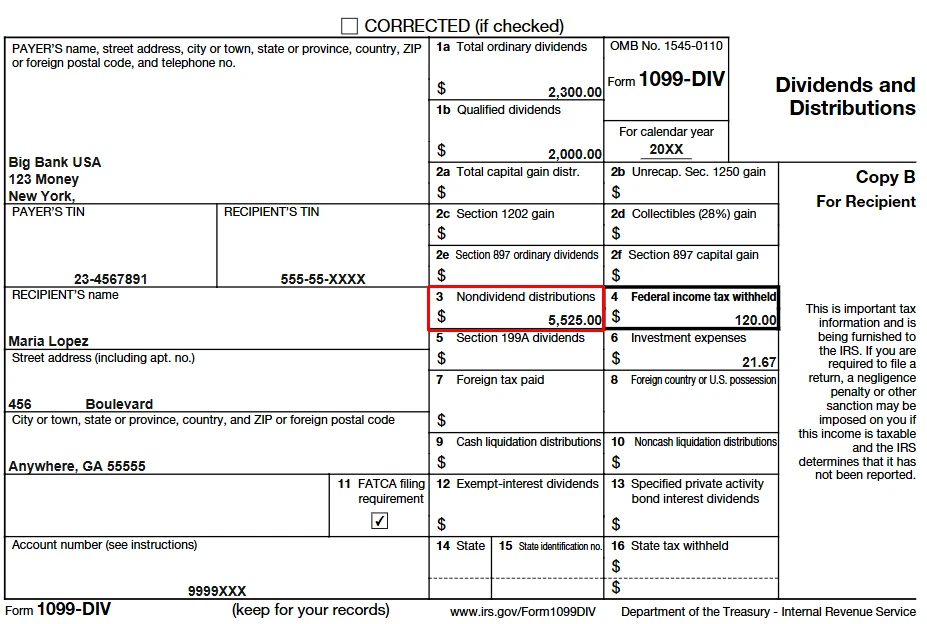
The nondividend distribution of $5,525 reported on Form 1099-DIV is not taxable income. A nondividend distribution is a reduction of stock basis and is not taxable. 

1099-DIV sample

1099-INT

1099-INT Sample


R2 Wrong Problem lesson Record


Seciton 179 

R6 : Wrong Question Lesson

1. Which, if any, of the following statements are true under Chapter 15 of the United States Bankruptcy Code?    

CPA REG Review Entity Taxation R3

C Corporation Overview


Differences Between Book and Tax


Corporation Tax Computations and Credits

CPA REG Review Property Taxation R2

M1 Basic and Holding Period of Assets


M2 Gains and Losses


M3 Cost Recovery


CPA REG Review Individual Note R4

R4 Professional and Federal Tax Procedures

1 Circular 230

◾1 Overiview

Subpart A Rules governing the authority to practice before the IRS

R1-2 Wrong Problem lesson Record

Itemized Deduction


Individual preferential Income Tax Rates : Long-term capital gains

CPA REG Review Individual Note R1

1 Filling Requirements and Filling Status


2 Gross Income:Part I


3 Gross Income: Part II


4 Adjustments 

4.1 Educator Expenses  (Qualified expenses paid up $300, MFJ both are educator Max $600).

 K-12 teacher ,instructor, counselor, principal, or aside working in a school for at least 900 hours during a school year.

4.2 Traditinal IRA contribution deduction  

4.3 Student Loan Interest dedutction (Limited $2,500).

AGI Phase Out : [2025]  Unmarried $85,000 ~ $95,000 , Married $170,000 ~ $200,000

A dependent may not claim the adjustment ,The taxpayer must be legally obligated to pay the loan. Only deduction qualified education expenses. 

4.4 Health savings accounts

a) Pretax contribution : 2025 year up to $4,300/$8,550 ,and if taxpayers age 55 or older the amount are increased by $1,000 .

b) Excludable Distributions : Distributions made prior to age 65 that are not used to pay qualified medical expenses are includable in gross income and subject to an additional 20% tax.

c) High-Dedctible plan Difined : at least $1,650/$3,300 annual deductible for self/family coverage plans.

Out-of-pocket Limitation:  $8,300 / $16,600

d) Archer Medical Saving Account (MSA) Contributions : No new Archer MSAs could be established after the year 2007. Before established are allowed to continue. 

Qualified paritcipants are self-employed individuals or employees of small businesses (<50 employees)

These accounts were designed to be and must be used in conjunction with a high-deductible health insurance plan( $2,850~$4,300 / $5,700 ~ $8,550). Out-of-Pocket expenses limit is $5,700/$10,500

4.5 Moving Expenses

Only allowed for members of the Armed Forces (or spouses and dependents)on active duty who move pursuant to a mailitary order and incident to a permanent change of station.

4.6 Penalty on Early withdrawal of Savings

4.7 Alimony ( Time 12.31.2018 )

Before December 31,2018 payment for the support of a former spouse are income to the spouse receiving the payments and are deductible to arrive at adjusted gross imcome by the contributing spouse.

Child Support : Nontaxalbe to Payee / Nondeductible to Payor

Payment Applies first to Child Support

Property Settlement (Nontaxable / Nondeductible).

4.8 Attorney Fees paid in discrimination Cases :

Allowed for attorney fee paid in connection with age,sex,racial discrimination,and whistle-blowers cases. Limited to the amount of claimed as income form the judgment.

4.9 IRA Contributions[Deductible tradaitional IRA, Roth IRA & Nonductible traditional IRA]

a) General  2025  The annual Max contribution to IRA limited to the lesser of :

Unmarried | under Age 50 | $7,000 or Earned income  Age 50+  |  $8,000 or Earned income

Married    |  under age 50 | $14,000 or Earned income Age 50+  |  16,000 or Earned income

* Earned Income Includes : (Postive income) Salary and Wages,Commoissions, Bounuses, Alimony (before 12.31.2018 divorce),Net earnings form self-employment, Non-tuition fellowship and stipend payments treated as taxble comensation.

b) Dedcatible Tradional IRA Contributions

Contribution can be deductable - NonTaxable

Distributions of both Principal (contributions) and Earnings at qualified age all as general income taxable

Distributions if unqualified age early withdrawl penalties.  

Minumum distributions are required to be taken by April 1 of the year following the year in which the taxpayer reachers age 73.

Limitation on Dedcatible Tradional IRA Contributions 

Particpation in employer-sponsored retirement Plans 

AGI Limitations and Phase out : Unmarried  : $79,000 ~$89,000. Married  $126,000 ~ $146,000 

[Speical Rule ]: If a married taxpayers is not an active participant in an employment 's retirement plan, but the spouse is , the deduction for the spouse who is not an active participant  is phase out based on the following AGI Limitations.

    Married filling Jointly : $236,000~$246,000 , MFS 0-$10,000 

2025 Modified AGI Phase-OutSpouse 1 has Earned IncomeIf spouse 2 has no Earned Income
In ESPPCan IRA DeductedCan IRA Deducted
N/ANoYesYes
< $126,000YesYesYes
$126,000-$146,000YesYes*Yes
$146,001-$235,999YesNoYes
$236,000-$246,000YesNoYes**
> $246,000***YesNoNo
If spouse 2 has earned income, follow the same rules as spouse 1.
ESPP = Employer Sponsored Retirement Plan
* The IRA deduction for the working spouse is phased out.
** The IRA deduction for the nonworking spouse is phased out.
*** At modified AGI of more than $246,000, neither the working spouse nor the nonworking spouse can deduct their traditional IRA

2025 IRA Deduction Summary

2025 Tax Filing for IRA Contributor2025 Modified AGIIRA Deducted
Single individual or Heads of household who are
active participants under employer plans.
$79,000 or less100%
$79,000- $89,000Partial
$80,000 or moreNone
MFJ if the spouse who makes the IRA contribution
is an active participant under employer plan.
$126,000 or less100%
$126,000-$146,000Partial
$146,000 or moreNone
MFJ A individual who is not an active participant under an
employer plan but is married to someone who is.
$236,000 or less100%
$236,000-$246,000Partial
$246,000 or moreNone
A married individual filling a separate return who is an
active participant under an employer plan
less than $10,000Partial
$10,000 or morenone

c)  Roth IRA Contributions 

Allowable Roth contributions limited MAGI :

Unmarried :  $150,000~ $165,000 . Married $236,000 ~ 246,000 . MFS 0 ~ 10,000

d) Nonductible Traditonal IRA

If a taxpayer's dedction for a contribution to a tranditional IRA is limited ,a non dedctible traditional IRA contribution can be made instead.The overall limitation still applies to the combined deductions and nondeductible contributions (2025 : $7,000 or earned income).

4.10 Adjustments for self-employed Taxpayers

a) Self-Employment tax (50%) can deducted to arrive at adjusted gross income.

b) Self-Employed Health Insurance : may deduct all of the premiums paid for taxpayer ,spouse ,and dependents.

c) Self-Employed Retirement Plan Contributions

Simplified employment pension (SEP)IRAs

Max. Contribution to SEP IRAs Lesser of : 1)  25% of employee's compensation  2) $70,000 

Self-Employment Contribution to SEP IRAs Lesser of : 1) 20% self employment net income reduced by  50% self-employnet tax deduction. 2) $70,000

Saving incentive match plan for employees(SIMPLE)IRAs

Limited lesser of :

1) 100% self employment net income reduced by 50% self-employnet tax deduction

2) $16,500.

Age 50 - 59 and 64+  $ 3,500 , Age 60,61,62,63 $5,250 

SOLO 401(k)s.

Limited lesser of : 


1) 20% self employment net income reduced by  50% self-employnet tax deduction

2) $70,000  

* Age 50 - 59 and 64+  $ 7,500 , Age 60,61,62,63  $11,250 

5 Itemized Deductions

5.1 Standard Deduction : $15,000, $22,500, $30,000

Older 65+ and Blindness : Unmarried $2,000/$4,000. Married $1,600 X EA (Older/Blindness ) $1,600 , $3,200, $4,800 , $6,400.

Dependent of Another: Greater of $1,350 or Earned income plus $450. 

5.2 Itemized Deductions

1) Medical Expenses.   Excess 7.5% AGI  

Deductible:

  • Medicine and prescription drugs,include Medicare part D premiums

  • Doctors 

  • Medical, Health and Accidental insurance premiums (include long-term care premiums )

  • Transportation to medical facilities: Actual cost or Allowance 24cents per mile.

  • Physically disabled costs

  • Expenses incurred by the physically disabled for the removal of structural barriers in the residences to accommodate a disability are treated as medical expenses.

Nonductible:

  • Elective surgery,elective costmetic operations,drugs that are illegal,travel,vitamins,the part of Social Security Tax paid for basic Medicare,funerals,Cemetery lots,and insurance against loss of earnings due to sickness or accident( note that cosmetic surgery requires due to an accident or deformity  qualify.)

  • Life insurance.

  • Capital expenditures( up to the increase in the FMV of the property because of the expenditure.)

  • Health club memberships recommended by a doctor for general health care( It would have to be more specific to make it deductible)

  • Personal hygiene and other ordinary personal expenses(e.g. toothpaste,toiletries,over-the-counter medicines,bottle water,diaper service,maternity clothes,etc.)

2) State,Local and Foreign TAXes. ( limted $10,000) 

    Real estate taxes(state and local taxes) , Person property taxes (state and local taxes), Income taxes(State,local and Foreign Taxes), sales Tax.

    Nondeductible taxes : Federal Taxes (including Social Security),Inheritance taxes for states, Business (on Schedule C) and Rental property taxes (on Schedule E).

3) Casualty Losses (10% AGI and $100 floor) : Presidentially declared disaster area.

4) Gambing Losses fully deductible limited gambling winnings.

5) Miscellaneous Itemized Deductions 2%  (2018-2025)

6) Interest Expense :Home Mortgage Interest and Investment Interest Expense

     Home Mortgage Interest  : $375,000 / $750,000

     Investment Interest Expense : dedctution limited investment income

7) Charitable contributions (60%, 50%,30%,20%AGI )

Ordinary income property (less one year and depreciated in value)

Long-term capital gains property (More than one year and appreciation)

Cash | Public and Private Operating Foundations: 60%AGI.  | Private Nonoperating Foundations : 30%AGI

Ordinary income Property | Public and Private Operating Foundations: 50%AGI.  | Private Nonoperating Foundations : 30%AGI

Long-term capital gain property | Public and Private Operating Foundations: 30%AGI. | Private Nonoperating Foundations : 20%AGI

* Carryforward 5 years , First In First Out Basis

* More than $75 donor need written statement ,bank record. More than $500(Form 8283) need a write appraisal or publicy traded securities.

6 Section 199A QBI Deduction up to 20%

Qualified Business Income (QBI) Ordinary business income less ordinary business deduction earned from a sole proprietorship ,s corpation,limited liability company,or parntership connected to business conducted within the U.S QBI does not include any wages earned as an employee or guaranteed payment to partners.Dividends,interest,and long-term and short-term capital gains and losses are not included.QBI for a business must be reduced by any adjustments taken to arrive at AGI that relate to that business . This includes the deductible part of the slef-employment(SE) tax,deductions for qualified contributions to SE retirement plans,and SE health insurance deductions.

Qualified Trade or Business (QTB):  

Specified Service Trade or Business (SSTB):is a classification given to certain service businesses. If your business provides a service rather than a product, the business likely classifies as a SSTB. Engineering and architectural services are specifically excluded from the definition of SSTB).

Limitation based on taxble income level

Single and all Other | $197,300 ~$247,300  Married filling jointly | $394,600~$494,600

Category I | Full 20%QBI deduction | If taxble income at or below $197,300/$394,600 | QTB and SSTB 

Category II  | phase out 20% QBI

Category III | If taxble income above $247,300/$494,600 | SSTB  No QBI Dedcution 0 , QTB  full W-2 wage and Porperty limitation

QBI deduction is limited to the Greater of :

1) (W-2 wages for the business)x50%   

2) (W-2 wages for the business)x25%+ (All qualified property)x2.5 

Overall Limit lessor of : 20%QBI or ( Taxable Income - Net capital Gains ) x 20% .

The overall deduction is limited to the lesser of : the combined QBI deductions or 20% of the taxpayer's taxable income in excess of net capital gain.

7 Tax computations and credits

7.1 Individual Ordinary 

Tax rate : Progressive structure 10,12,22,24,35 and 37%  

Preferential Rate for LTCG:  0%,15%,20% (Base on Tax Income)

7.2 Tax Cridits 

Refundable Credits

  • Federal Income tax withheld(Form W-2)

  • American opportunity credit(40% refundable)

  • Chilld tax credit(refund is limited)

  • Earned income credit

  • Excess Social Security tax paid

Nonrefundable credits

Child and dependent care credit

Elederly and permanently disabled credit

Education Credits

* Lifetime Leaning Credit

* American Opportunity Credit 60% nonrefundable

Retirment saving contribution credit

Foreign tax credit

General business credit

Adoption credit

R1) Child Tax Credit (Limited Refundable) $2,000 tax credit for each "Qualifying Child"

 "CARES" dependent except age of 17 

Phase-Out: MAGI exceeds: MFJ $400,000, Other $200,000 . Reduce per $50 for each $1000 (When $440,000/$220,000 Will "0") 

Refundalbe Amount:

Lesser of

1)  excess of child tax credit over tax liability  

2)  (Earned income - $2,500) x 15% 

3)  $1,700 per qualifying child 

R2) Earned Income Credit (Refundable) 2025

Earned income is wages,salaries,tips,other employee compensation,and earnings from self-employnent, it does not include pension and annuity income.

Qualifying Child : 

1) Son,daughter adopted child,grandchild,stepchild,foster child,brother,sister,stepbrother,stepsister,descendant etc.

2) age 19 or under 24 full-time student ,or any age permanently and totally disabled. 

3) lived more than half of the taxable year U.S home .

4) is the taxpayer's dependent (if the child is married).

2025 Earned Income Credit CalculationNo ChildOne ChildTwo ChildrenThree or More
Maximum earned income credit$649$4,328$7,152$8,046
Earned income required to receive Max.Credit$8,490$12,730$17,880$17,880
Credit Rate %7.6534.0040.0045.00
Phase-out %7.6515.9821.0621.06
Credit Phase-out for AGI or Earned income(if greater)
over this amount [all taxpayers except MFJ]
$10,620$23,350$23,350$23,350
Credit Phase-out for AGI or Earned income(if greater)
over this amount [MFJ]
$17,730$30,470$30,470$30,470

Investment Income exceeding $11,950 can not claim the Earned Income Credit. Includes taxable and nontaxable interest,dividends,net rental and roralty income,net capital gains income,and net passive income.

R3) Tax Withheld (W-2) (Refundable)

   All income taxes withheld from a taxpayer's paycheck are treated as a "credit" against the taxpayer's tax liability.

R4) Excess FICA (Social Security Tax )Withheld(Refundable)

One Employer : the employer must refund the exces to the employee, no credit is allowed.

Two or More employer : Excess as a credit against income tax ( in the payment section)

R5) Premiun Tax Credit (PTC) (Refundable)

 The premium tax credit is a refundable credit that helps eligible individuals and families with low or moderate income afford health insurance purchased through a health insurance marketplace. The"credit"are available immediately when the insurance is purchased to help eligible individuals pay for their monthly health insurance premiums.

N1) Child and Dependent Care Credit (Nonrefundable)

Maximum allowable expenses are : One dependent $3,000 | Two or More $6,000 

Qulifying person : Under age 13 or disabled dependent 

Eligible expenditures must be for : Babysitter,nursery school,Day care,not elementary school.

Calculation The amount that is eligible for the credit is the lesser of : 

1) lesser earning spouse 

2) actual expenses 

3) the Max. allowable amount. 

Maximum 35% x Credit value : Taxpayer's AGI lesser $15,000

Phase out From 35%-20% Over $15,000, 1% for each $2,000 [$21,000 AGI , 21,000-15,000=6,000/2000=3, calulation perscent 32%]

Minimun 20% x Credit Value : Taxpayer's AGI more than $43,000

N2) Education Tax Incentives : AGI limits $80,000~$90,000 | $160,000~$180,000 

American opportunity Tax Credit Max $2,500: first 4 years of postsecondary (College)education 

First $2,000 , 100% Plus next $2,000 x 25% = Max $2,500

Refundable portion : up to 40% AOTC is refundable , equal $1,000  

Life Learning Credit : Max $2,000 Qualified expenses up to $10,000 x 20% for "per taxpayer" rather than "per student"

Not limited to one type of credit per Tax Return : One child - American Opportunity Credit and another child lifetime leaning credit.

Coverdell Education Saving Accounts : Max. $2,000 Nondeductible 

Section 529 Plan qualified tuition program (QTP): Nodeduction vary by state.

    2025 Education Tax Incentives Summary Table Becker REG Book P R1-74 

N3) Credit for the Elder and/or Permanently Disabled : 15% (Nonrefundable)

 Qualified:age 65+ or under age 65, retired due to total and permanent disability,and received taxable disability imcome for the year.

Base Amount : $5,000 for single person or qualifying suviving spouse, or if married filling jointly and only one spuse is a qualified individual. $7,500 if married filling jointly and both are qualified individuals (if MFS $3,750 for a qualified individual ).  Under age 65 and has disability  income of less than $5,000 ,the base amonut is limited to $5,000.

* Adjustment Gross Income Limit :

 (1) any Social Security Payment and other excludable pensions or annities received by the taxpayer

 (2) 50% taxpayer's adjusted gross income that exceeds  the following levels : Single $7,500 MFJ $10,000, MFS $5,000.

N4) Adoption Credit : 2025 Up to $17,280 (Nonrefundable)

   Phase out : MAGI $259,190~$299,190,excess of your tax liability may be carried forward up to 5 years

   Time: The credit is claimed for years after the payment is made until the adoption is final.

N5) Retirement savings contributions credit (Saver's Credit) (Nonrefundable) Max.$2,000 for per taxpayer (MFJ $4,000)

   Eligible Taxpayers : 18+ ,not a full-time student, not a dependent of another taxpayer

   Allowable Credit: 10%, 20%, 50%, No Carryover is allowed.

N6) Foreign Tax Credit (Nonrefundable) 

Disallowed may be carry back 1 year and carry forward 10 years.

Limited to the lesser of : 

1) Forign taxes paid or

2) (Taxable income from all foreign operations) x (U.S.Tax) / (Total taxable worldwide income)

N7) General Business Credit(Nonrefundable) Carry back 1year or Carry forward 20 years

  • Investment credit

  • Work opportunity tax credit[($2,400) 40% first $6,000 of first year's wages, ($1,200) 40% first $3,000 to certain summer youth]

  • Alternative fuels credit.

  • Increase research credit ( General 20% of the increase in qualified research expenditures over the base amount for the year)

  • Low-income housing credit.

  • Qualified child care expenditures.

  • Welfare-to-work credit.

  • Employer-provided child care credit

  • Small employer retirement plan star-up cost credit [First three years of the plan effective,less than 100 employees who received at least $5,000 compensation in the preceding year.  At least one plan participants is a non-highly compensated employee. ]

  • Small Business Health care Tax Credit : carry back 1 or carry forward 20 years

  • Alternative motor vehicle credit

  • Other infrequent (on exam) Credits.

Calculation of General Business Credit

 The credit is limited to regular tax liabilities  after other tax credits, minus 25% of regular tax liability(after other tax credits) Over $25,000.

 Max. credit permitted : (0 - $25,000) x 100% , Excess x 75% 

Small employer retirement plan star-up cost credit Amonut of the credit:

The Greater of  : 

1) 100% the first $1,000 for 50 or fewer employees (for 51~100 employee with 50%)

2)  lesser of : $250 each emplyee or $5,000 .

N8 a) Residential Energy Credits

Credit 30% installation costs for qualifying solar ,wind and geothermal energy-generating systems in 2022-2032, 2033(26%), 2034(22%).

Credit 30% costs of qualified energy efficiency improvements placed in service Dec 31,2022. Max. Anuual $1,200.

N8 b) Vehicle and Fuel-Related Credits:  

Up to $7,500 for new electric vehicle ( $4,000 for previously owned electric vehicle) plased in December.31, 2022 [December.31, 2025 not available ]

30% of the installation costs of "qualified alternative fuel vehicle refueling property" install in the home, Max. Credit $1,000

AICPA Accounting Fundamentals 1-2

Chapter I Introducation to Financial Statements

  1. What's is Accounting?

    Measure Business Activeties  ; Process data into reports ; Communicate results to desicion makers ; Produce financial statements

AICPA Important Terminlogy

2024 AICPA Terminlogy

Factoring :  Selling receivables at a discount to obtain immediate cash .Traditionally involves the outright sale of receivables to a financing institute know as factor.

<< 1 2 3 4 5 6 > >>

Powered By Z-BlogPHP 1.7.4

Copyright Your WebSite.Some Rights Reserved.